

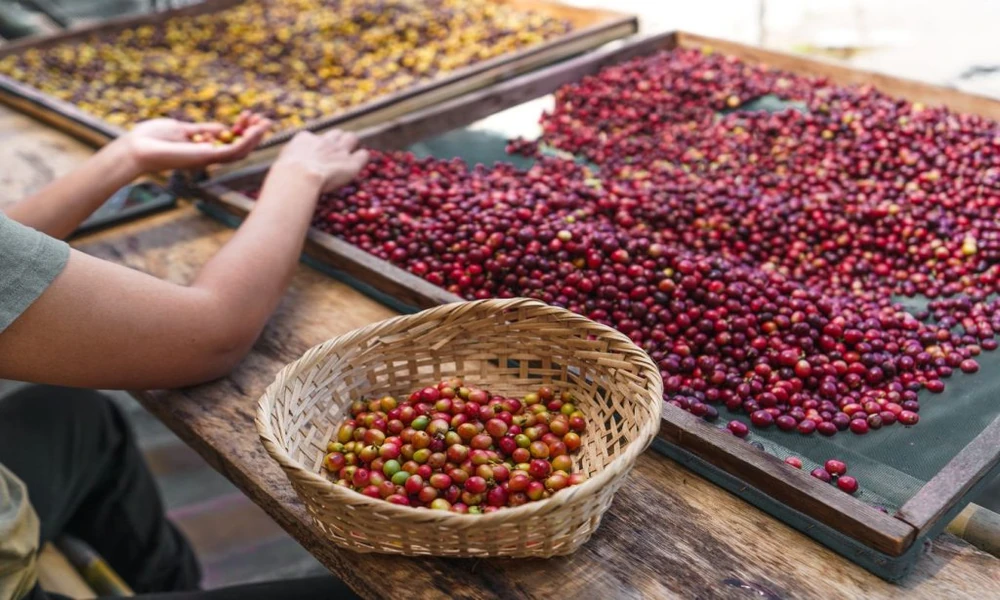
Two bags of arabica beans can sit side by side on a shelf at noticeably different prices despite looking similar, and the reasons behind that gap usually trace back to a handful of factors in how, where, and when the beans were grown, processed, and brought to market.
Growing Altitude and Climate
Arabica plants that grow at higher altitudes generally produce higher-quality beans, since the cooler temperatures at elevation slow the maturation of the coffee cherry and allow more complex sugars to develop within the bean. This slower growth also means lower yield per plant and per hectare, which directly increases the cost of production relative to beans grown faster at lower elevations. Farms operating at higher, more challenging altitudes typically pass this higher production cost through to the price of the finished bean, which is part of why high-altitude origins tend to command a premium over lowland-grown arabica.
Processing Method
After harvesting, coffee cherries go through one of several processing methods, broadly categorised as washed, natural, or honey processing, each requiring different equipment, labour, and time. Washed processing, which removes the cherry’s outer fruit before drying the bean, tends to be more labour and water intensive but produces a cleaner, more consistent flavour profile, while natural processing dries the whole cherry with the bean still inside, which is less resource-intensive but requires careful management to avoid inconsistent results. The more meticulous the processing method, generally, the higher the resulting cost, since it demands more skilled labour and closer quality control throughout.
Harvest Yield and Weather Variability
Coffee is an agricultural product subject to the same yield swings as any other crop, and a poor harvest year in a major growing region, whether from drought, excess rainfall, or disease affecting the plants, reduces overall supply and pushes prices upward across the market. Because arabica is more climate-sensitive than robusta, requiring specific temperature and rainfall conditions to thrive, its price tends to swing more noticeably in response to a difficult growing season in a key origin region than hardier alternatives would.
Origin Reputation and Scarcity
Certain growing regions have built reputations for consistently high-quality output over years or decades, and beans from these established origins often command a premium simply because buyers trust the quality signal that comes with the name, similar to how a well-regarded wine region can charge more than a lesser-known area producing objectively comparable grapes. Limited-availability micro-lots from a single small farm, as opposed to beans blended across many farms in a region, also tend to carry higher prices due to their scarcity and the more hands-on attention smaller farms can give each harvest.
Currency, Freight, and Import Costs
Coffee is traded internationally, which means currency fluctuations between the Singapore dollar and the currencies of major growing regions directly affect landed cost, along with shipping rates that have shown real volatility in recent years due to broader global freight conditions. These logistics costs sit on top of the farm-gate price and can shift meaningfully month to month independent of anything happening at the growing origin itself, which is part of why bean pricing isn’t purely a reflection of quality.
Certification and Sustainability Premiums
Beans carrying certifications such as organic, fair trade, or rainforest-friendly labelling typically cost more, reflecting the added cost of meeting and auditing against those standards throughout the growing and processing chain. Whether that premium is worth paying depends on what an office actually values, since some companies specifically want their pantry choices to reflect broader sustainability commitments, while others prioritise cup quality and cost above certification labels. Neither position is wrong, but it’s worth being clear about which factor is actually driving the buying decision before comparing prices across certified and non-certified options.
Comparing Value Across Different Price Points
Rather than assuming the most expensive arabica automatically delivers the best value for an office pantry, it helps to weigh price against what actually matters for your team’s daily use, since a well-sourced, moderately priced bean can suit a shared office setting just as well as a premium micro-lot most people wouldn’t be able to distinguish in a busy workday. A bean like the Brazil-origin arabica available through Daiohs illustrates this balance well, offering the smooth, approachable character typical of Brazilian coffee at a price point suited to regular office consumption rather than occasional specialty indulgence.
Roasting Costs and Batch Size
The roasting process itself adds another layer of cost that varies depending on batch size and roast profile, since small-batch roasting done in smaller machines with closer temperature control generally costs more per kilogram than large-volume industrial roasting. A roaster crafting a precise profile for a specific origin, adjusting time and temperature to bring out that bean’s particular characteristics, is investing more skilled labour into each batch than one running a standardised profile across many different origins at once. This is part of why two beans roasted by different operations can carry noticeably different prices even when the raw green coffee cost was similar.
Why Price Isn’t a Reliable Shortcut for Quality Alone
It’s worth resisting the assumption that the highest price on a shelf automatically signals the best bean for an office setting, since some of that premium reflects genuine quality differences while some reflects marketing, packaging, or brand positioning that has little bearing on what ends up in the cup. A more useful approach for a buyer stocking a shared pantry is comparing beans within a similar price band and paying attention to origin transparency and roast date information, which tend to be more reliable quality signals than price alone.
Arabica pricing reflects a genuine chain of agricultural and logistical factors, from altitude and processing method through to freight costs, and understanding these drivers helps an office buyer judge whether a given price represents fair value rather than simply reacting to the number on the bag.
